Machame Route – 7 Day Climb Pricing
$2,900 – $3,300 per person USD
Group departure rate. Includes park fees, guide/porter/cook wages, camping fees, all meals on the mountain, and safety equipment. Excludes flights, visa, tips and personal gear.
Fair Wages Included · Small Groups · Park Fees Included · Airport Pickup
- Route: Machame ("Whiskey Route") — 7 days, 6 nights on the mountain
- Higher acclimatization profile via the Lava Tower / Barranco "climb high, sleep low" day
- Small groups, max 8 climbers per departure
- Guides, cooks and porters paid above Tanzania's Labour Institutions Wage Order minimum
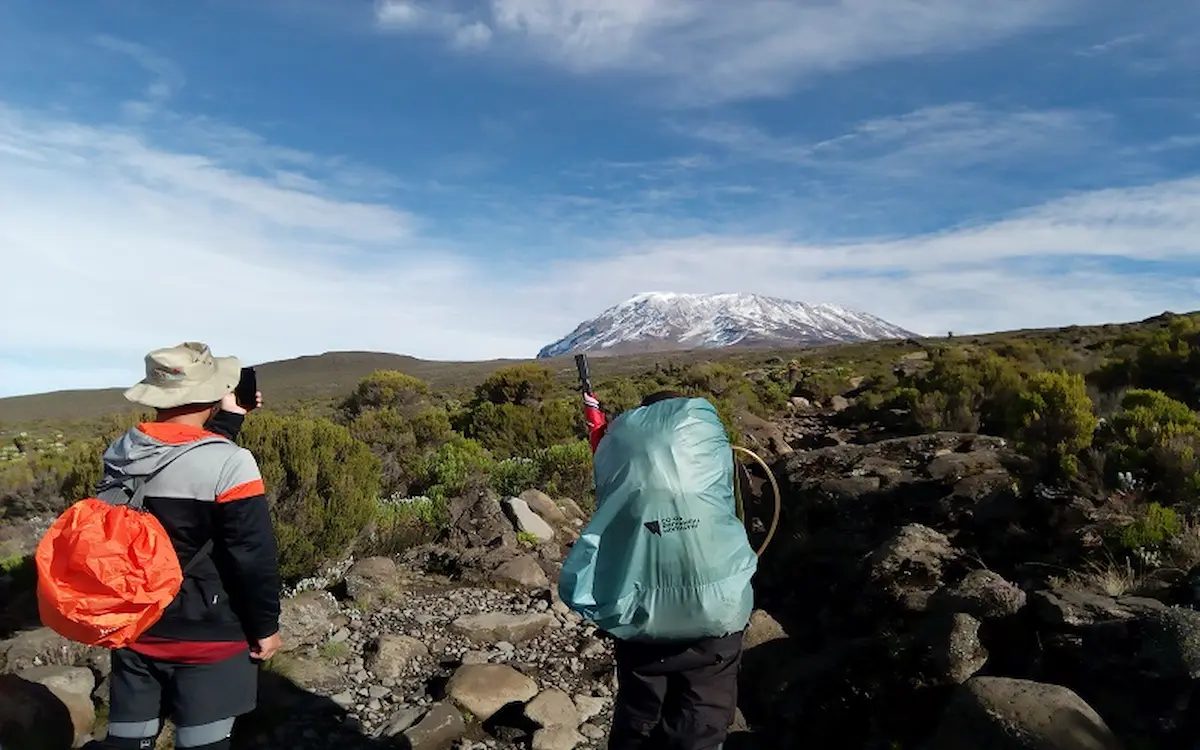
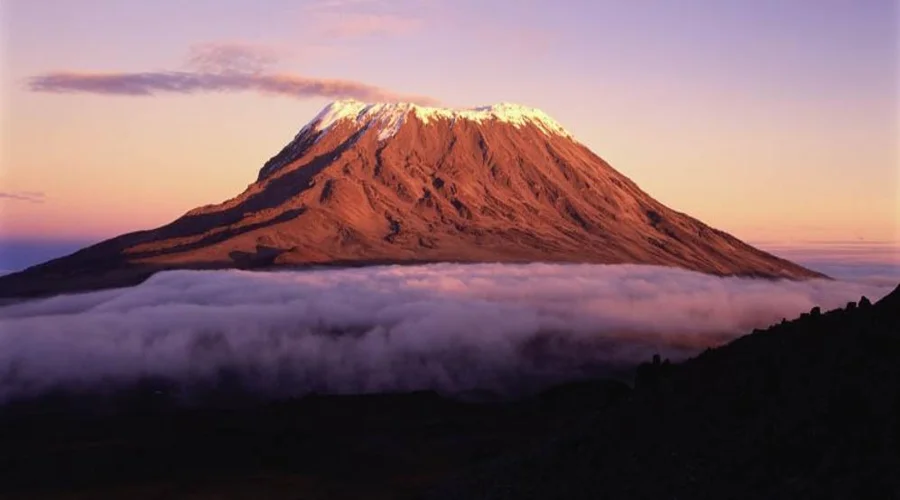
The Machame Route is Kilimanjaro's most popular path to the summit, and for good reason — it crosses five distinct climate zones, from rainforest to alpine desert to the arctic summit zone, in a well-paced seven days. The extra day compared to shorter routes gives your body real time to adjust to altitude, which is the single biggest factor in whether climbers reach Uhuru Peak.
This entry-tier package keeps costs to Tanzania's fair, non-budget price floor — not the lowest price on the market, but the lowest price that still pays guides, cooks and porters properly and equips them to national park safety standards. Porters on this climb carry a maximum of 20kg per Tanzania National Parks regulation, are provided with proper cold-weather gear, and are paid above the government's published minimum wage for the sector.
Mount Kilimanjaro Fair Wages Included · Small Groups · Park Fees Included · Airport Pickup climbing route specifications:
- Duration: Fair Wages Included · Small Groups · Park Fees Included · Airport Pickup
- Start & End: Moshi or Arusha, Tanzania
- Accommodation: High-quality mountain camping tents
🏔
Five climate zones in seven days, from rainforest to snow-capped summit
🏔
Built-in acclimatization day via the Lava Tower detour
🏔
Porters capped at the legal 20kg load limit and properly equipped
🏔
Qualified guides trained in high-altitude first aid and oxygen use
🏔
Small group departures, max 8 climbers
🏔
Small group departures, max 8 climbers
- Day 1: Trek Through Rainforest to Machame Camp
- Day 2: Ascend to Shira Plateau
- Day 3: Lava Tower Acclimatization and Barranco Camp
- Day 4: The Barranco Wall to Karanga Camp
- Day 5: Karanga to Barafu Base Camp
- Day 6: Summit Night: Uhuru Peak, then Descend to Mweka Camp
- Day 7: Descend to Mweka Gate and Certificate Presentation
Day 1
Trek Through Rainforest to Machame Camp
Meals: L, D11km · 5–7 hrs · 1,800m → 3,000mRainforest zone
The climb begins at Machame Gate (1,800m) after registration and a briefing from your guide team. The trail climbs steadily through Kilimanjaro's lower rainforest belt, home to colobus monkeys and old-growth podocarpus trees. Expect mud in the wet season — sturdy boots and gaiters help. You'll reach Machame Camp (3,000m) in time for a hot dinner prepared by your cook team
🔥 HIGHLY ANTICIPATED SUMMIT DAY
Day 2
Ascend to Shira Plateau
Meals: B, L, D5km · 4–5 hrs · 3,000m → 3,840m
Leaving the forest behind, the trail opens onto moorland with heather and giant lobelia. The climb to Shira Camp (3,840m) is shorter than Day 1, but altitude starts to make itself felt — your guide keeps the pace deliberately slow. Clear afternoons offer your first real views of Kibo's summit across the Shira Plateau.
Day 3
Lava Tower Acclimatization and Barranco Camp
Meals: B, L, D10km · 6–7 hrs · 3,840m → 4,630m → 3,960mAcclimatization day
This is the key acclimatization day: the trail climbs to Lava Tower (4,630m) before descending to Barranco Camp (3,960m), putting the "climb high, sleep low" principle to work. The volcanic scenery around Lava Tower is stark and dramatic, and the descent into the Barranco Valley reveals giant senecio plants found nowhere else on the mountain.
Day 4
The Barranco Wall to Karanga Camp
Meals: B, L, D5km · 4 hrs · 3,960m → 4,035m ·Barranco Wall scramble
he day opens with the Barranco Wall — a scramble rather than a technical climb, but exposed enough that guides keep groups close together. Past the Wall, the route undulates across ridges and valleys to Karanga Camp (4,035m), a shorter day that leaves time to rest before the push toward summit night.
Day 5
Karanga to Barafu Base Camp
Meals: B, L, D4km · 4 hrs · 4,035m → 4,673m ·
A steady four-hour climb takes you from Karanga to Barafu Camp (4,673m), the launch point for the summit attempt. The afternoon is deliberately unhurried — an early dinner and rest are prioritized over sightseeing, since the summit push begins shortly after midnight.
🔥 HIGHLY ANTICIPATED SUMMIT DAY
Day 6
Summit Night: Uhuru Peak, then Descend to Mweka Camp
Meals: B, L, D19km · 12–14 hrs · 4,673m → 5,895m → 3,100mSummit night
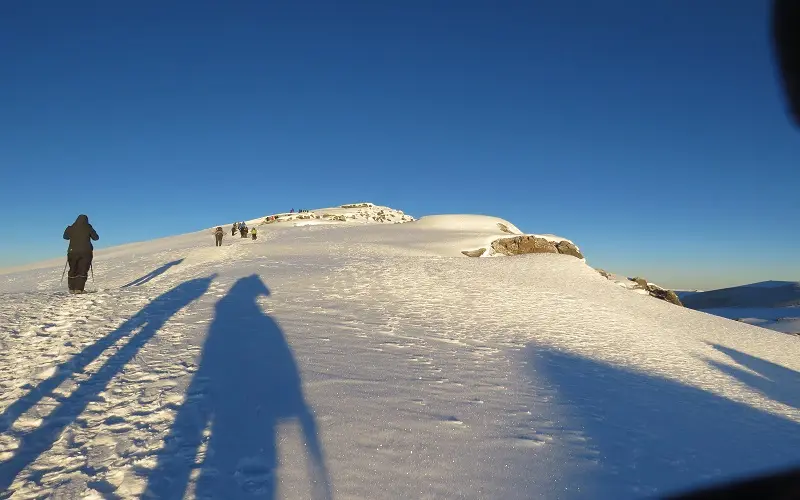
Climbers set off from Barafu around midnight to reach Stella Point by sunrise and Uhuru Peak (5,895m) — Africa's highest point — shortly after. The descent to Mweka Camp (3,100m) the same day is long and hard on the knees; trekking poles are strongly recommended. This is the toughest day of the climb by a wide margin.
Day 7
Descend to Mweka Gate and Certificate Presentation
Meals: B10km · 3–4 hrs · 3,100m → 1,640m
A final descent through rainforest brings you to Mweka Gate (1,640m), where successful climbers receive their summit certificate. A vehicle transfers you back to your Moshi or Arusha hotel, where a hot shower and real bed are waiting.
Kilimanjaro National Park entry and camping fees
Professional guide, assistant guides, cook and porter team
Guide, cook and porter wages paid above Tanzania's legal minimum
All meals on the mountain plus purified drinking water
Shared 2-person sleeping tents and mess tent
Park rescue fees and guide-carried emergency oxygen
Pre-climb briefing and airport (JRO) pickup
Kilimanjaro National Park summit certificate
International flights and Tanzania visa
Personal climbing gear and clothing
Tips for guides, cooks and porters
Moshi/Arusha hotel nights before or after the climb (can be added)
Travel and evacuation insurance
Private toilet tent (available as an add-on)
🕵️♂️
KPAP & Local Experts
Our guides have 10+ years of tracking experience, knowing exactly where the wildlife migrates and how to escape the crowds.
🚙
Custom 4x4 Vehicles
Travel in safety with custom-modified Toyota Land Cruisers featuring charging ports, large windows, and a pop-up roof.
⭐
Tailored Hospitality
We handpick clean, high-service safari lodges and luxury camps, ensuring delicious meals and excellent comfort after game drives.
The best time to climb Mount Kilimanjaro is during the dry months of January-March and June-October, when the weather is stable with less rain.
Peak season
Good season
Low / rainy season
FAQ
What is the success rate on the 7-day Machame Route?
The extra acclimatization day via Lava Tower gives Machame one of the higher summit success rates among Kilimanjaro routes, though individual fitness and pacing still matter most.
FAQ
How fit do I need to be?
No technical climbing skill is required, but multiple days of hiking fitness and prior high-altitude experience (or none at all, with good acclimatization) both work — your guide sets the pace.
FAQ
Why is entry-tier pricing higher than some operators I've seen online?
Prices under $3,000 for a fair-wage Kilimanjaro climb are difficult to sustain without cutting porter wages or safety equipment — this package is priced at Tanzania's genuine fair-wage floor, not a discount rate.
FAQ
What food is provided on the mountain?
Three meals a day, prepared fresh by your cook team, with menus adjusted for altitude appetite changes.
FAQ
Do I need to tip the crew separately?
Yes — tips for guides, cooks and porters are excluded from the package price and customary in Tanzania; your guide can advise on standard amounts.
FAQ
Can I rent climbing gear locally?
Yes, cold-weather gear and trekking poles can be rented in Moshi or Arusha before the climb.

 Moshi, Tanzania
 +255 742 596 234
 generoustours@gmail.com