 Moshi, Tanzania
 +255 742 596 234
 generoustours@gmail.com






6-Day Machame Route Kilimanjaro Climb - Overview
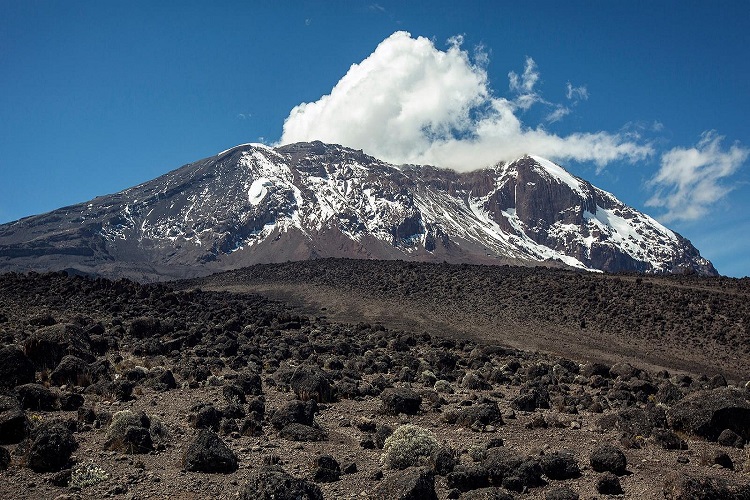
The Machame Route — nicknamed the "Whiskey Route" — is widely regarded as the most scenic and rewarding path to Kilimanjaro's Uhuru Peak at 5,895 metres, winding through lush rainforest, alpine moorland, dramatic lava ridges, and the surreal glaciated summit zone, with an 85%+ summit success rate on the 6-day itinerary. Our package departs every week from Moshi, Tanzania, led exclusively by KINAPA-certified senior mountain guides with 10+ years of high-altitude experience, in intentionally small groups of a maximum 8 trekkers for personalised attention and superior safety monitoring. From the moment you arrive at Kilimanjaro International Airport (JRO) to the moment you stand on the Roof of Africa, our team handles every logistical detail — all national park entrance, camping, and rescue fees, professional porters, full-board mountain meals, quality camping tents, sleeping mats, and a private dining tent — so all you carry is your personal daypack. Whether you're a first-time high-altitude trekker or an experienced adventure traveller, the Machame Route's gradual altitude gain and multiple acclimatisation opportunities make it the number one recommended Kilimanjaro itinerary by professional mountain guides worldwide.
Mount Kilimanjaro 6 Days Trek climbing route specifications:
- Duration: 6 Days Trek (All Park Fees Included)
- Start & End: Moshi or Arusha, Tanzania
- Accommodation: High-quality mountain camping tents
6-Day Machame Route Kilimanjaro Climb - Highlights
6-Day Machame Route Kilimanjaro Climb - Short Itinerary
- Day 1: Machame Gate to Machame Camp — Enter the Rainforest
- Day 6: Summit Uhuru Peak & Descent to Mweka Gate — Roof of Africa
- Day 2: Machame Camp to Shira Camp — Moorland & First Plateau Views
- Day 3: Shira Camp to Barranco Camp via Lava Tower — The Key Acclimatisation Day
- Day 4: Barranco Camp to Karanga Camp — Conquer the Barranco Wall
- Day 5: Karanga to Barafu High Camp — Rest, Prepare & Summit Briefing
6-Day Machame Route Kilimanjaro Climb - Detailed Day-by-Day Itinerary
Machame Gate to Machame Camp — Enter the Rainforest
After breakfast at your Moshi hotel and a pre-climb briefing covering altitude awareness, pace, and safety, transfer by 4WD to Machame Gate (1,800m) — the official start of the route. Beyond the park registration gate, the trail enters Kilimanjaro's lush montane rainforest, a UNESCO World Heritage ecosystem alive with Hartlaub's turacos and Colobus monkeys, climbing steadily through moss-draped hagenia trees and giant ferns.
After 5–7 hours covering 11 kilometres, arrive at Machame Camp (3,021m) above the tree line with your first panoramic views of Kibo's summit cone, where your porter team has camp and dinner ready. Altitude tip: drink 3–4 litres of water, eat your full dinner even with reduced appetite, and expect a pulse-oximeter check before bed.
Machame Camp to Shira Camp — Moorland & First Plateau Views
Today's stage is shorter in distance but significant in altitude gain, from Machame Camp (3,021m) to Shira Camp (3,840m) across an ancient volcanic plateau. The trail exits the forest into the open heath and moorland zone — giant lobelias, everlasting flowers, and red-hot poker plants — with expanding views back to the Tanzanian plains and, on clear mornings, Mount Meru (4,562m).
You cross the Shira Ridge onto the flat Shira Plateau, the remnant of an ancient collapsed volcanic crater, arriving at Shira Camp (3,840m) with unobstructed views of Kibo's Western Breach and the Arrow Glacier. Acclimatisation note: mild headache or reduced appetite is normal at this altitude — your guide monitors everyone with pulse oximetry at dinner, following the "walk high, sleep low" principle that tomorrow's route puts into action.
Shira Camp to Barranco Camp via Lava Tower — The Key Acclimatisation Day
Day 3 is the most strategically important day on the itinerary — the reason this route delivers superior acclimatisation and a higher summit success rate than shorter alternatives, following the classic "climb high, sleep low" principle. The trail crosses the lunar alpine desert zone to the base of the Lava Tower (4,630m), a 300-metre volcanic rock pinnacle, where lunch gives your body 1–2 hours of adaptation above most of the altitude range your circulatory system needs for summit night.
From Lava Tower, the route descends nearly 700 vertical metres into the Great Barranco Valley, past towering giant groundsels (Senecio kilimanjari) found only on Kilimanjaro, to Barranco Camp (3,976m) — sleeping 650m lower than the afternoon high point, the secret to Machame's acclimatisation advantage. Tomorrow's preview: the near-vertical Barranco Wall rises directly above camp — non-technical but requiring hands and feet, covered in this evening's guide briefing.
Barranco Camp to Karanga Camp — Conquer the Barranco Wall
The day begins with the most exhilarating section of the route — the Barranco Wall scramble, a non-technical 300-metre rocky ascent that every fit trekker can complete safely with guide and porter assistance at exposed sections. The 1.5–2 hour climb rewards you with views across the Southern Glaciers and Shira Plateau, and reaching the top is one of the most memorable moments of the climb.
Beyond the wall, the trail continues along ascending ridges and valleys across Kibo's southern face, offering close-up views of the Heim, Kersten, and Decken Glaciers, before descending to Karanga Camp (4,035m) — the mountain's last reliable water source. The afternoon is for rest and hydration ahead of tomorrow's push to high camp. Health check: your guide conducts a full evening wellness assessment (oxygen saturation, heart rate, headache score, appetite, sleep) to confirm everyone is safe to continue.
Karanga to Barafu High Camp — Rest, Prepare & Summit Briefing
A short but pivotal day — the calm before the summit push. The 3–4 hour morning hike from Karanga Camp (4,035m) to Barafu High Camp (4,673m) crosses an exposed volcanic ridgeline with Kibo's summit cone filling the sky. Barafu means "ice" in Kiswahili, and temperatures reflect that name at this altitude. Barafu Camp is Kilimanjaro's primary staging point for summit attempts on the Machame, Lemosho, and Shira routes, with dramatic views over the Mweka Valley and toward the glaciated crater.
The afternoon is dedicated entirely to rest and a mandatory summit night briefing covering the exact route to Uhuru Peak, timeline, cold-weather layering, and safety decision-making. Summit Night Schedule: 17:00 early dinner, 18:00–23:00 rest, 23:00 wake-up and midnight snack, 00:00 summit attempt begins, 06:00–08:00 Stella Point crater rim (5,739m), 07:00–09:00 Uhuru Peak summit (5,895m), 09:00–11:00 descent begins. Cold weather reminder: temperatures range from -10°C to -25°C with wind chill — pack all warm layers accessible at the top of your daypack.
Summit Uhuru Peak & Descent to Mweka Gate — Roof of Africa
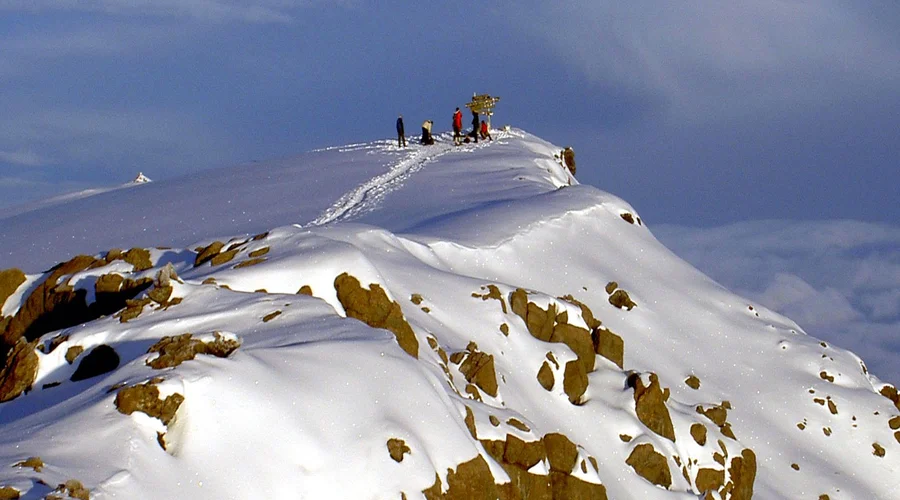
Starting at midnight from Barafu High Camp (4,673m), the final push to the Roof of Africa begins under equatorial stars, ascending loose volcanic scree and packed snow at a deliberately slow pole pole pace, with oxygen at approximately 49% of sea level. As dawn breaks behind Mount Meru, you reach Stella Point (5,739m) on the crater rim, then a further 45–60 minutes along the rim brings you to Uhuru Peak (5,895m) — the highest point in Africa and the highest freestanding mountain in the world.
After photos and celebration at the summit, the descent quickens as the body acclimatises rapidly, passing back through Barafu for a hot breakfast and gear collection, then continuing via the Mweka Route through alpine desert, moorland, and rainforest to Mweka Camp (3,100m) and finally Mweka Gate (1,640m). Here your Kilimanjaro Summit Certificate is presented — green for Uhuru Peak, blue for Stella Point — followed by a tipping ceremony for your porter and guide team before the drive back to Moshi for a hot shower and celebration dinner.
6-Day Machame Route Kilimanjaro Climb - Accommodation Standard
6-Day Machame Route Kilimanjaro Climb - Inclusion & Exclusion
What's Included?
What's Excluded?
Why Book with Generous African Tours?
What's Best Time to Visit 6-Day Machame Route Kilimanjaro Climb?
The best time to climb Mount Kilimanjaro is during the dry months of January-March and June-October, when the weather is stable with less rain.
Clear
Clear
Wet
Wet
Wet
Excellent
Excellent
Excellent
Excellent
Good
Quiet
Festive
Frequently Asked Questions
Q: How much should I tip the guides and porters?
Q: How fit do I need to be to climb Kilimanjaro on the 6-Day Machame Route?
Q: What is the summit success rate on the 6-Day Machame Route?
Q: What gear and clothing do I need for the Machame Route?
Q: When is the best time to climb Kilimanjaro on the Machame Route?
Q: Are park fees included in your Machame Route price?
Q: What happens if I experience severe altitude sickness on the mountain?
6-Day Machame Route Kilimanjaro Climb | Best Success Rate | From $1,350 : Tour Gallery