 Moshi, Tanzania
 +255 742 596 234
 generoustours@gmail.com





Our Best 7 Days Machame Route Kilimanjaro Trekking Experience - Overview
People ask me all the time — "Grenus Majumba, why Machame? Why not the easier route?" The answer isn't about difficulty. It's about story. The 7 Days Machame Route Kilimanjaro trek shows you everything — rainforest, moorland, alpine desert, glacier — in one continuous, breathing journey. It's often called the "Whiskey Route," strong and honest, and you earn every camp on this mountain.
I've walked this trail more times than I can count, with my fellow guides Mathew and Gabriel, and our kitchen and porter team who move like a quiet army before dawn so that by the time guests open their tents, hot water is already waiting. That's the part people never see in photos.
This is not a brochure. This is what actually happens, camp by camp, on a real Kilimanjaro trekking experience along the Machame Route itinerary — from the gate in Moshi all the way to the roof of Africa.
Mount Kilimanjaro Led by Experienced Local Guides climbing route specifications:
- Duration: 7 Days / 6 Nights
- Start & End: Moshi or Arusha, Tanzania
- Accommodation: High-quality mountain camping tents
7 Days Machame Route Kilimanjaro Trekking Experience - Highlights
7 Days Machame Route Kilimanjaro Trekking Experience - Short Itinerary
- Day 1: Moshi Town to Machame Gate – Machame Camp
- Day 2: Machame Camp to Shira Camp
- Day 3: Shira Camp to Barranco Camp via Lava Tower
- Day 4: Barranco Camp to Karanga Camp
- Day 5: Karanga Camp to Barafu Camp
- Day 6: Barafu Camp – Uhuru Peak Summit – Descent to Mweka Camp
- Day 7: Mweka Camp to Mweka Gate – Departure to Moshi
7 Days Machame Route Kilimanjaro Trekking Experience - Detailed Day-by-Day Itinerary
Moshi Town to Machame Gate – Machame Camp
It always starts quietly in Moshi town. Guests are nervous at breakfast, bags half-packed, minds racing. Mathew and I do final gear checks while Gabriel confirms permits at the park office. Porters load and sing as they stack duffel bags — there's a rhythm that keeps the weight light.
At Machame Gate, porters weigh bags, rangers check permits, guides call out names, and guests take that first nervous "before photo" under the wooden sign. After a packed lunch, we step into the rainforest — thick canopy, dripping moss, colobus monkeys calling above. We walk pole pole, slowly, because rushing this mountain is the first mistake every guest wants to make.
By the time we reach Machame Camp, porters who left ahead have already built camp — tents standing, mess tent up. Mustafa serves dinner with calm efficiency while our chef and assistant Wilson Mzava prep tomorrow's breakfast. Mpare keeps the kitchen running quietly behind the scenes. We hold our first evening briefing — laughter mixed with nervous questions about altitude.
Machame Camp to Shira Camp
Long before guests stir, porters are already awake, breaking down camp. Then comes the "morning call" — a guide or waiter gently asking at each tent: "Good morning! Chai or coffee?" Our chef has hot water basins ready for washing — small comfort, big impact on a freezing morning.
After breakfast served by Mustafa, we leave the rainforest behind. Giant heather and moorland replace thick trees, the air feels thinner and sharper. We stop for a trailside lunch with views back toward Moshi, now hazy in the distance. Guides Mathew and Gabriel check on slower walkers, sharing jokes to keep spirits light.
Shira Camp sits in open high-altitude desert, and on clear afternoons this is often the first proper view of Kibo Peak. Guests stop walking, cameras come out. Porters are already setting up tents on arrival, and our "sip sip water culture" hydration reminders begin in earnest tonight.
Shira Camp to Barranco Camp via Lava Tower
This is an acclimatization day, following the mountain's golden rule: climb high, sleep low. Same morning rhythm — morning call, hot water, breakfast served by Mustafa, while Wilson Mzava helps the chef pack trail lunch boxes.
We climb steadily toward Lava Tower at nearly 4,600 meters. The air thins, conversations get shorter, breathing gets louder. This is where altitude tests people honestly, and where guiding experience matters most — reading bodies, pacing groups, knowing who needs encouragement.
After lunch near Lava Tower, we descend into the dramatic Barranco Valley — giant Senecio plants, deep valley walls, striking afternoon light. Arriving at Barranco Camp is always emotional; the famous Barranco Wall looms ahead. Tents are ready, dinner is warm, and tonight's briefing focuses on tomorrow's wall — and the "Kissing Stone."
Barranco Camp to Karanga Camp
This short but intense day starts right after breakfast, with the Barranco Wall directly ahead — mostly hands-and-feet scrambling rather than technical climbing. Partway up is the famous narrow ledge guests call the "Kissing Stone," where you press your body against the rock face to pass safely. Guests laugh nervously, some genuinely scared, all proud once past it.
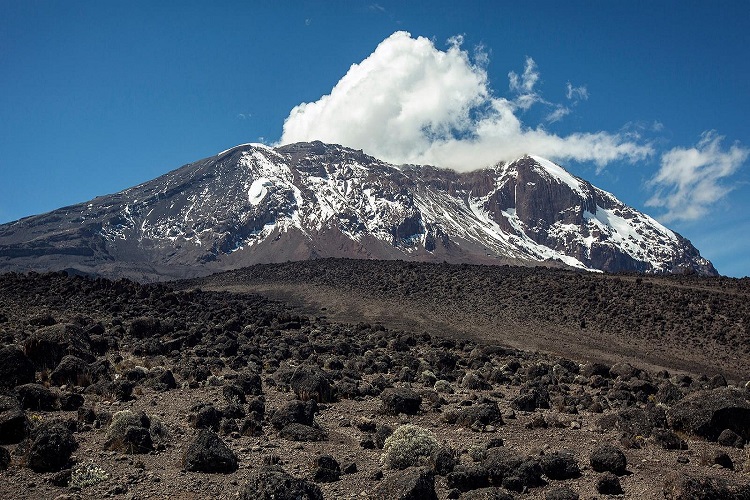
From the top of the wall, on a clear day, you get one of the best views of the entire trek — Kibo summit standing tall and real, closer than any photo guests have seen before.
The trail drops and climbs again through the valley toward Karanga Camp. The final steep climb tests tired legs, but porters are once again ahead of us, tents already rising. This is the last camp with reliable water, so porters carefully collect and treat stream water for the days ahead. Mpare and Wilson Mzava help prepare an extra hearty dinner — guests need the calories for what's coming.
Karanga Camp to Barafu Camp
Everyone feels it today — summit night is close. The walk to Barafu Camp is relatively short, but the barren, rocky landscape feels like another planet. On arrival, guests rest, eat an early dinner, and try to sleep, though almost nobody sleeps well before summit night.
The team checks gear meticulously — headlamps, layers, gloves, hand warmers. Guides Grenus, Mathew, and Gabriel hold a serious but warm briefing about what's coming. We rest as much as possible, because soon after midnight, the real test begins.
Barafu Camp – Uhuru Peak Summit – Descent to Mweka Camp
Around midnight, the camp stirs. Headlamps flicker on in the dark. Hot tea is passed around in the freezing cold. There's very little talking — just focus. We climb in darkness, slow and deliberate, pole pole, under a sky thick with stars. Switchbacks of scree test endurance, cold tests willpower, altitude tests everything.
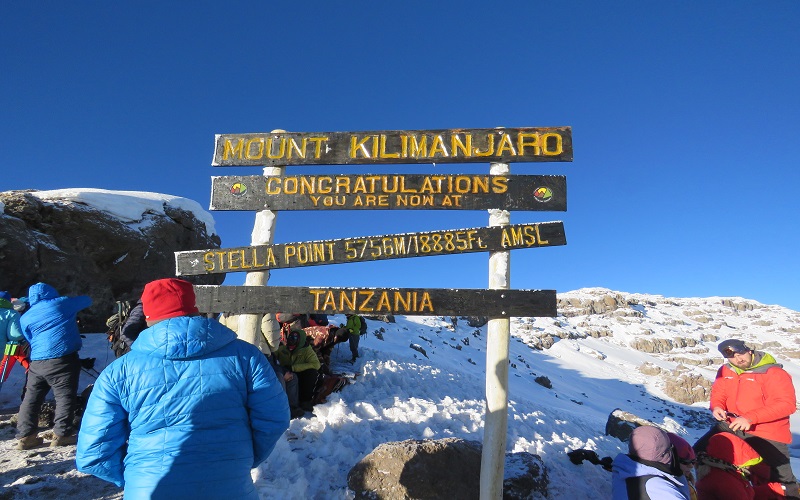
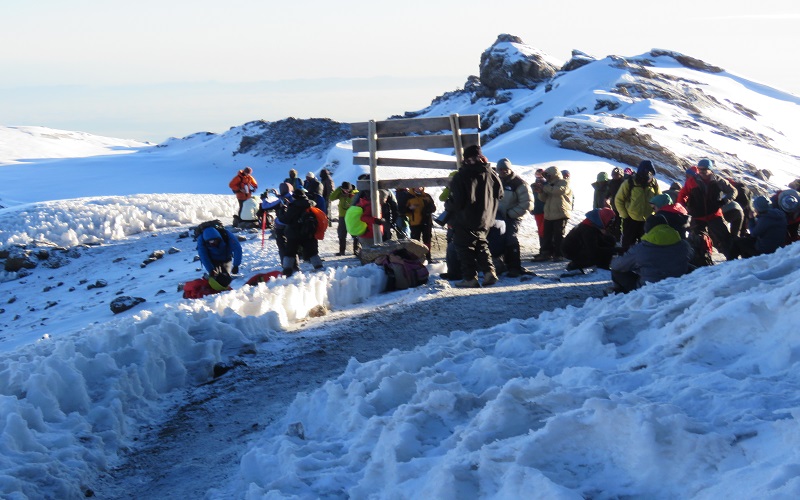
As dawn breaks near Stella Point, the sky turns gold and pink over the crater rim — one of the most emotional sights on this entire journey. From there, it's a final push along the crater edge to Uhuru Peak — 5,895 meters, the highest point in Africa. Tears, hugs, exhaustion, joy — different for every guest, but always real.
After photos at the summit sign, we descend quickly back to Barafu for a short rest and late breakfast, then continue down to Mweka Camp. The change in air and warmth is immediate and welcome. That night, dinner feels like a celebration — laughter returns, stories are already being told.
Mweka Camp to Mweka Gate – Departure to Moshi
This last morning feels different — lighter, slower, full of relief and quiet pride. Porters serve one final "morning call" with chai, and Mustafa brings breakfast to the mess tent for the last time. There's a mix of laughter and tiredness around the table; everyone is sore, but everyone is smiling.
After breakfast, the crew packs up camp quickly — tents come down, bags are weighed one last time, and the descent through Mweka's lush forest begins. The trail is steep and muddy in places, a sharp contrast to the alpine desert above. Birdsong returns, the air feels warm and thick with oxygen again.
At Mweka Gate, the formal part of the journey ends. Rangers check us out, and guides Grenus, Mathew, and Gabriel present each guest with their official summit certificate — a small piece of paper that carries a very big achievement. Porters and crew gather for a final farewell, often with songs and handshakes, before everyone loads into the vehicle for the drive back to Moshi town.
It's always a quiet, reflective ride back — guests staring out the window at the mountain shrinking behind them, already missing a place that pushed them to their limit and gave back so much more.
7 Days Machame Route Kilimanjaro Trekking Experience - Accommodation Standard
7 Days Machame Route Kilimanjaro Trekking Experience - Inclusion & Exclusion
What's Included?
What's Excluded?
Why Book with Generous African Tours?
What's Best Time to Visit 7 Days Machame Route Kilimanjaro Trekking Experience?
The best time to climb Mount Kilimanjaro is during the dry months of January-March and June-October, when the weather is stable with less rain.
Clear
Clear
Wet
Wet
Wet
Excellent
Excellent
Excellent
Excellent
Good
Quiet
Festive
Frequently Asked Questions
How difficult is the 7 Days Machame Route?
What is the success rate for reaching Uhuru Peak on 7 days?
What is the Kissing Stone on Day 4?
Who will be on my guiding and crew team?
What is the best time of year to climb Machame Route?
7 Days Machame Route Kilimanjaro | Real Guide Story : Tour Gallery