
 Moshi, Tanzania
 +255 742 596 234
 generoustours@gmail.com





Overview
The Migration Isn't a Schedule — It's a Response to Rain
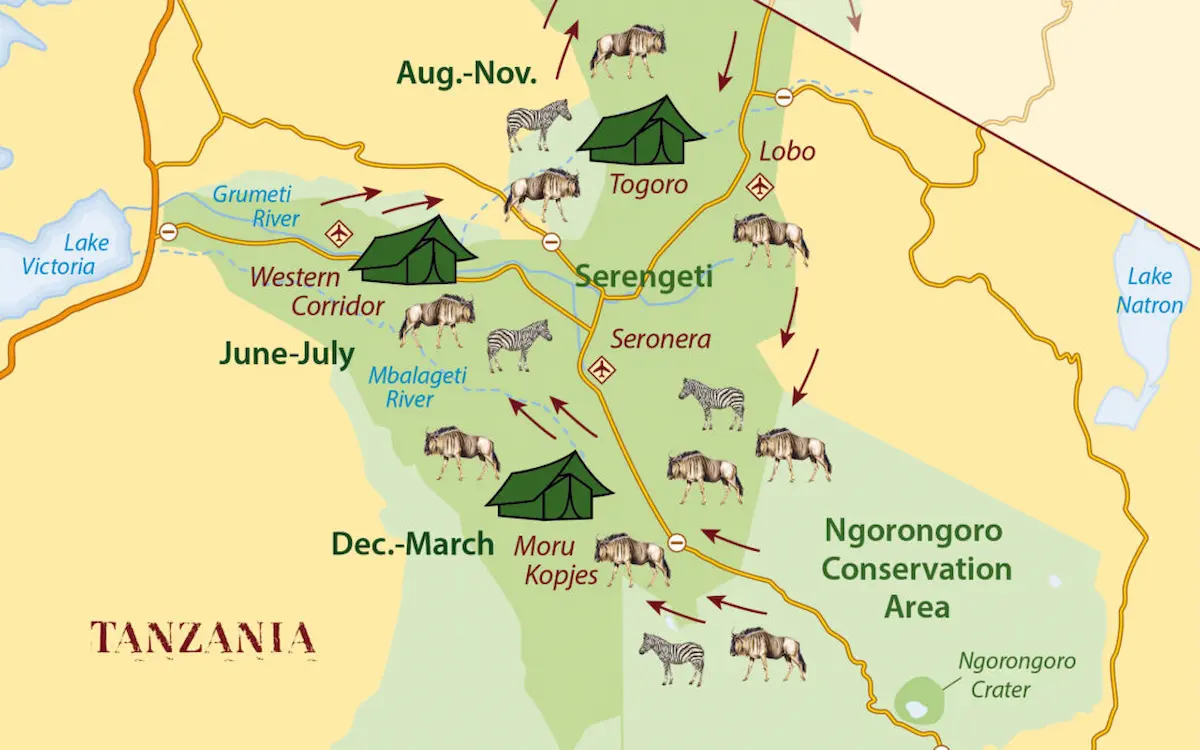
Roughly two million wildebeest, zebra, and gazelle move in a clockwise loop of about 800 kilometers across the Serengeti-Mara ecosystem, following the rain rather than a calendar. That's why exact crossing dates shift by weeks from year to year — the pattern below is a reliable guide, not a guarantee.
January – March: Calving Season in the South
The herds concentrate on the short-grass plains of the Southern Serengeti and the Ndutu area, part of the Ngorongoro Conservation Area. This is calving season — over 500,000 calves are born in a six-to-eight-week window, with as many as 8,000 births a day at the peak. The open plains make for exceptional predator sightings, since lions, cheetahs, and hyenas concentrate around the vulnerable newborns.
April – May: The Long Rains and Northward Push
As the rains set in, the herds begin stretching north through the central Serengeti toward the Western Corridor. Grass is lush, roads can be muddy, and the herds are more spread out than during peak season — but this is also when camp rates hit their lowest point of the year.
June – July: The Grumeti River Crossings
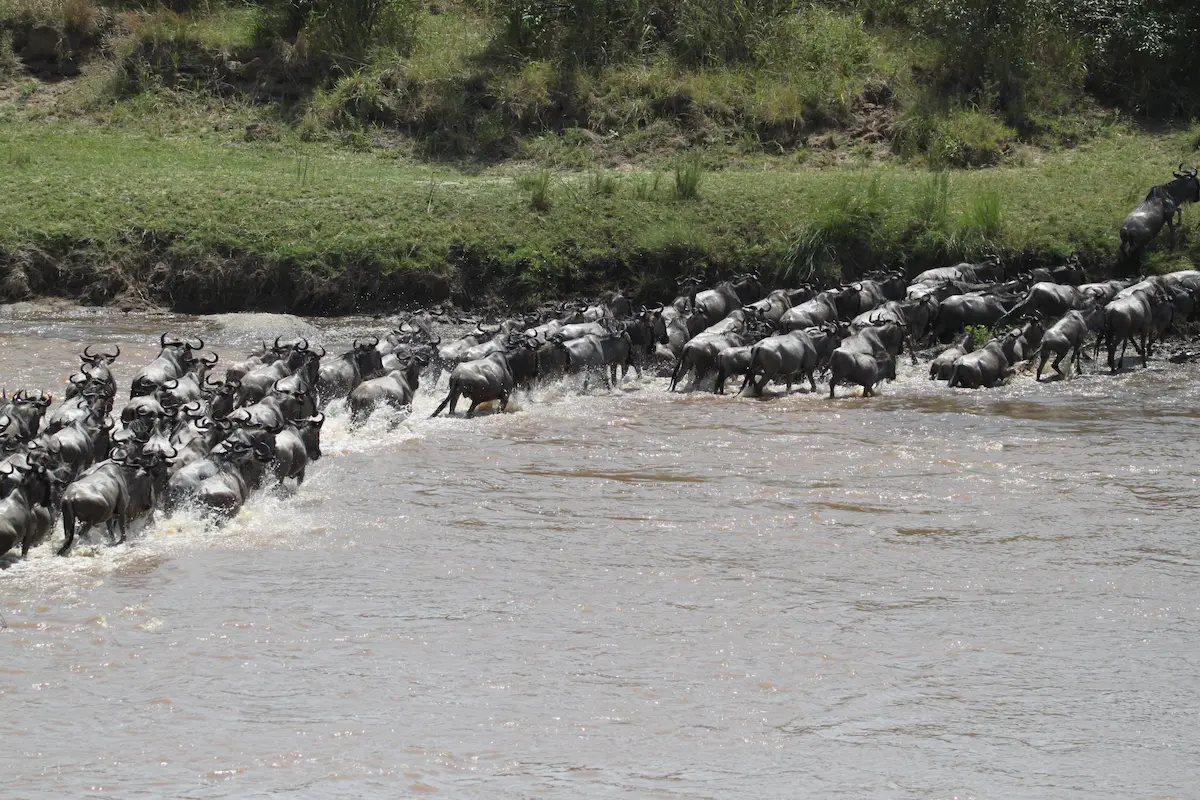
The leading columns reach the Western Corridor and face their first major obstacle: the Grumeti River. These crossings carry real drama — including crocodiles — but draw far fewer vehicles than the famous Mara crossings later in the season, making them a quieter alternative for travelers who still want crossing footage.
August – October: Mara River Crossings and Peak Season
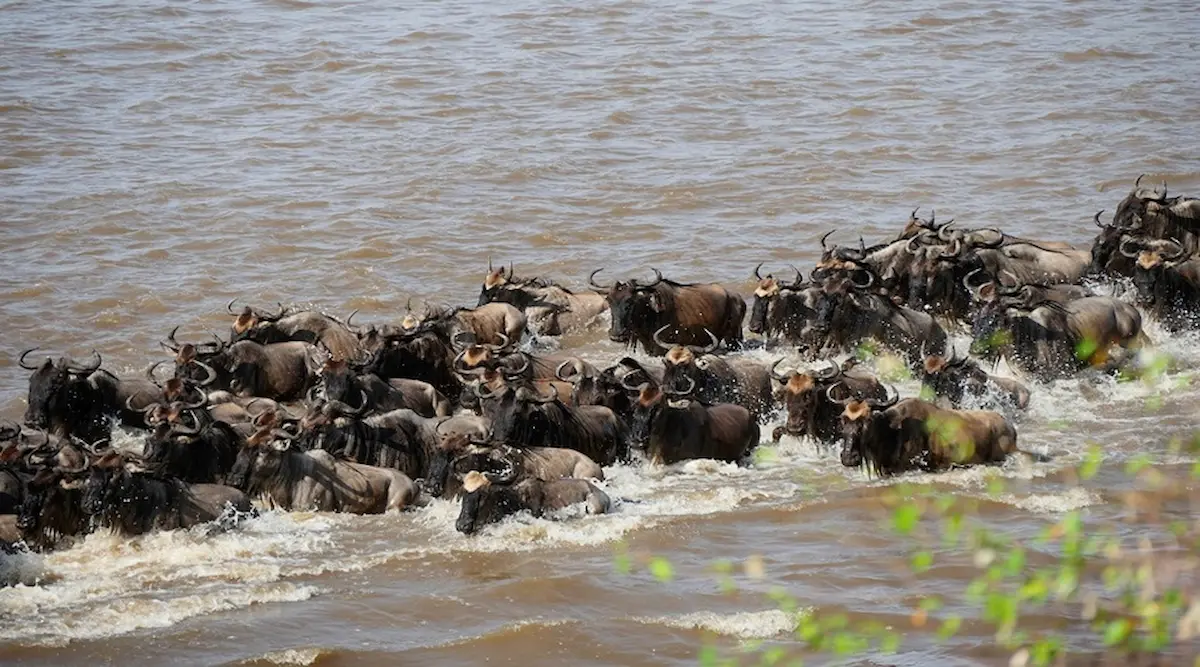
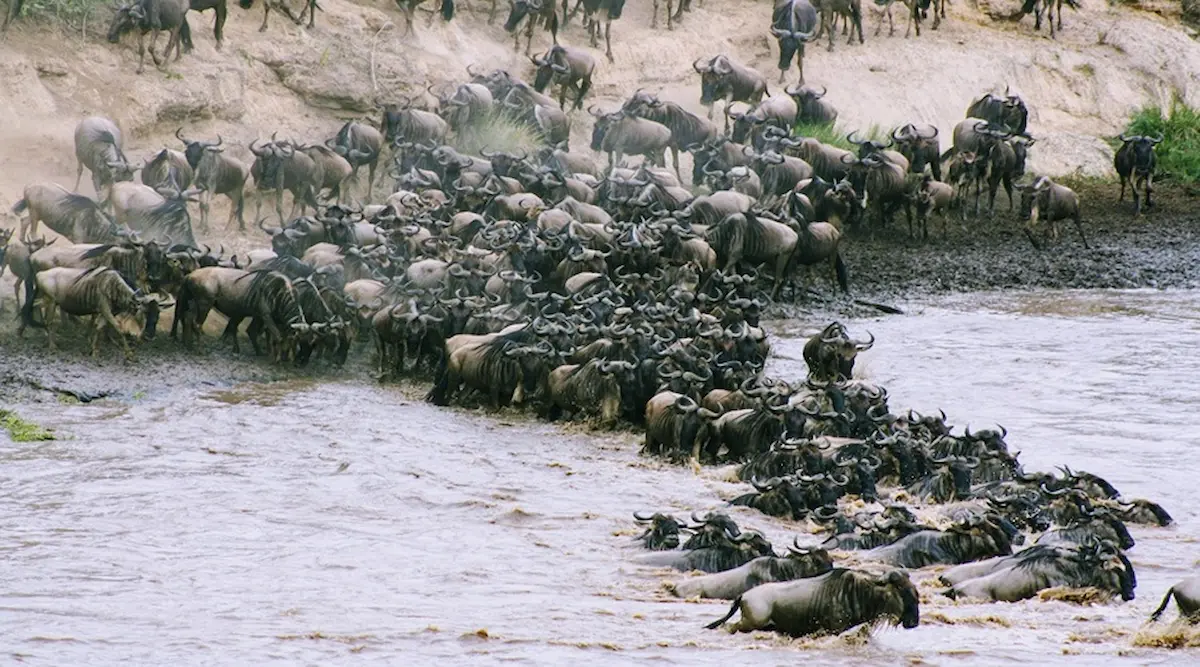
This is the window most travelers picture when they imagine the migration: herds pouring across the Mara River into Kenya's Maasai Mara and the northern Serengeti simultaneously. August is generally considered the statistical peak for crossing frequency, with river-side vehicle congestion at its highest. Camps in this zone fill 12–18 months in advance for good reason.
November – December: The Return South
As the short rains begin, the herds turn back south, passing through the eastern Serengeti toward Ndutu ahead of the next calving season. This transitional period offers green scenery, thinner crowds, and a good chance of catching resident wildlife around Seronera along the way.
Choosing Your Migration Window
For river crossings, target July through September and book camps in the northern Serengeti or Mara well in advance. For calving season and big cat action, aim for late January through February in the Ndutu area. If you want migration scenery without the crowds or the premium pricing, April, May, and November are worth serious consideration.
How We Track the Herds
Migration timing shifts with the rains, so we monitor real-time herd movement reports from guides on the ground before finalizing your camp locations — not just historical averages.
Photo Gallery
Tour Location & Route Map
Activities Included
Best Time to Visit
| Month | Season | Highlights | Status |
|---|---|---|---|
| January – March | Calving season, Southern Serengeti/Ndutu | Newborn calves and peak predator activity | Best |
| April – May | Long rains, herds move north | Lush scenery, lowest camp rates of the year | Quiet Season |
| June – July | Western Corridor | Grumeti River crossings, fewer crowds than Mara | Best |
| August – October | Northern Serengeti/Maasai Mara | Mara River crossings, statistical peak in August | Peak Season |
| November – December | Short rains, return migration | Herds head south, green landscapes, fewer visitors | Best |
Pricing & Packages
- Shared 4x4 vehicle
- Public campsites
- Group departures
- Camp cook and meals included
- Private vehicle and guide
- En-suite lodge rooms
- Full-board meals
- Flexible daily itinerary
- Private tented suite
- Fly-in options available
- All-inclusive dining and drinks
- Priority camp booking in peak months
- Small aircraft transfers between migration zones
- Remote luxury camps
- Private guide at each stop
- Real-time herd tracking included